Pysanky Panel
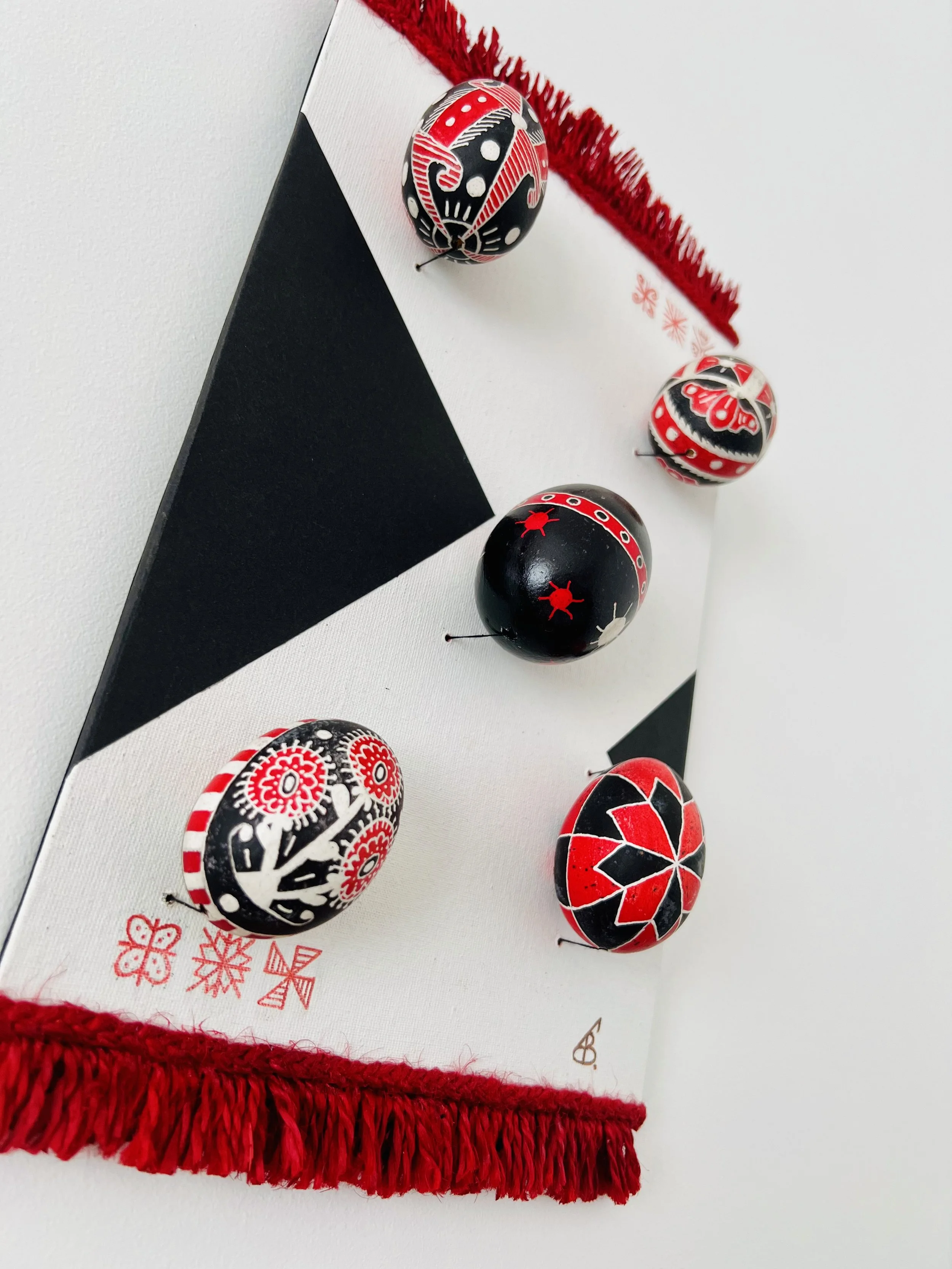
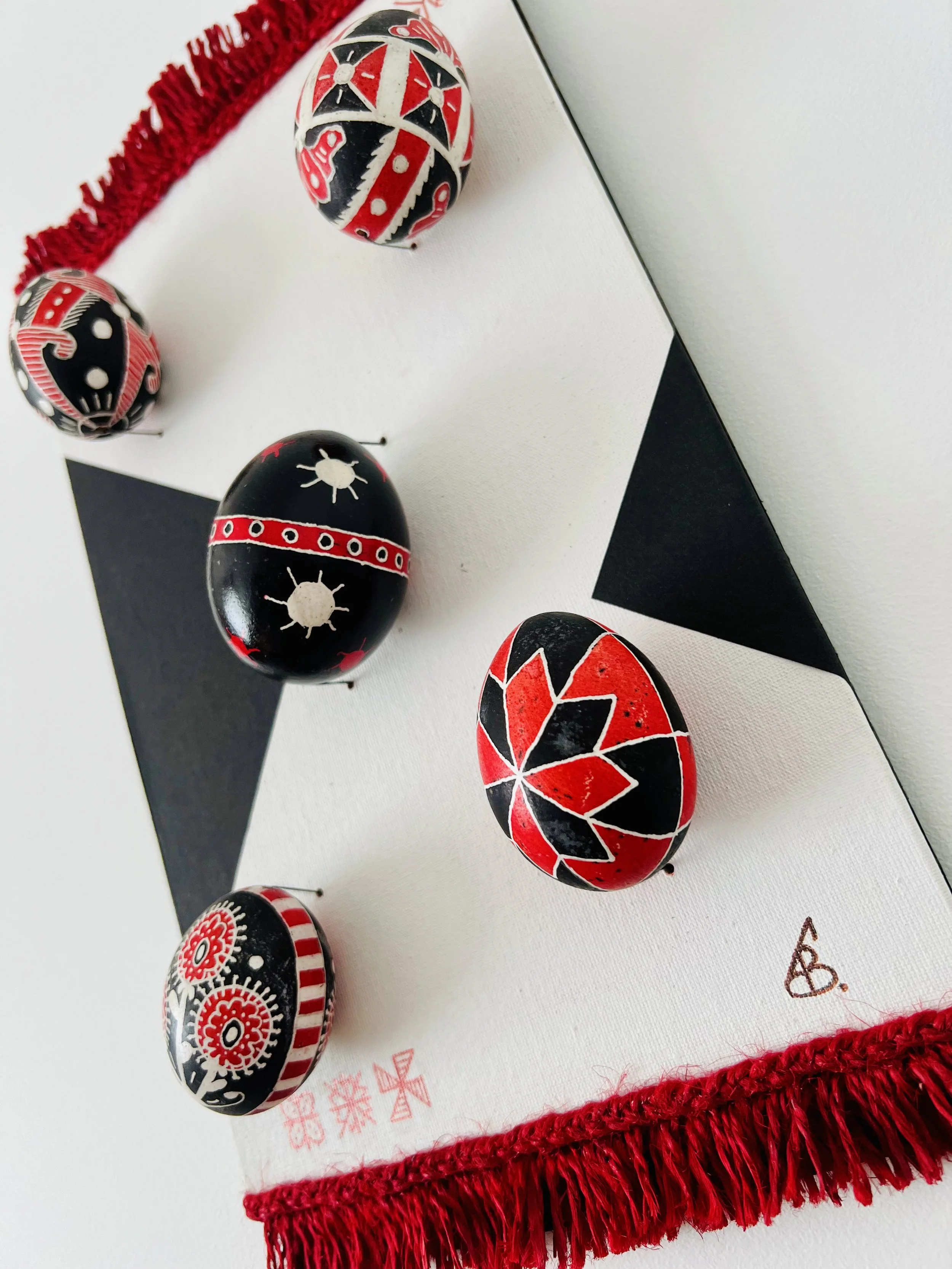
Pysanky Panel brings together five hand-painted eggs within a single symbolic composition, exploring the egg as one of the oldest forms through which ideas of life, nature, protection, continuity, and the cosmos have been carried across generations.
Artwork’s Slogan: “A Universe in the palm of a hand.”
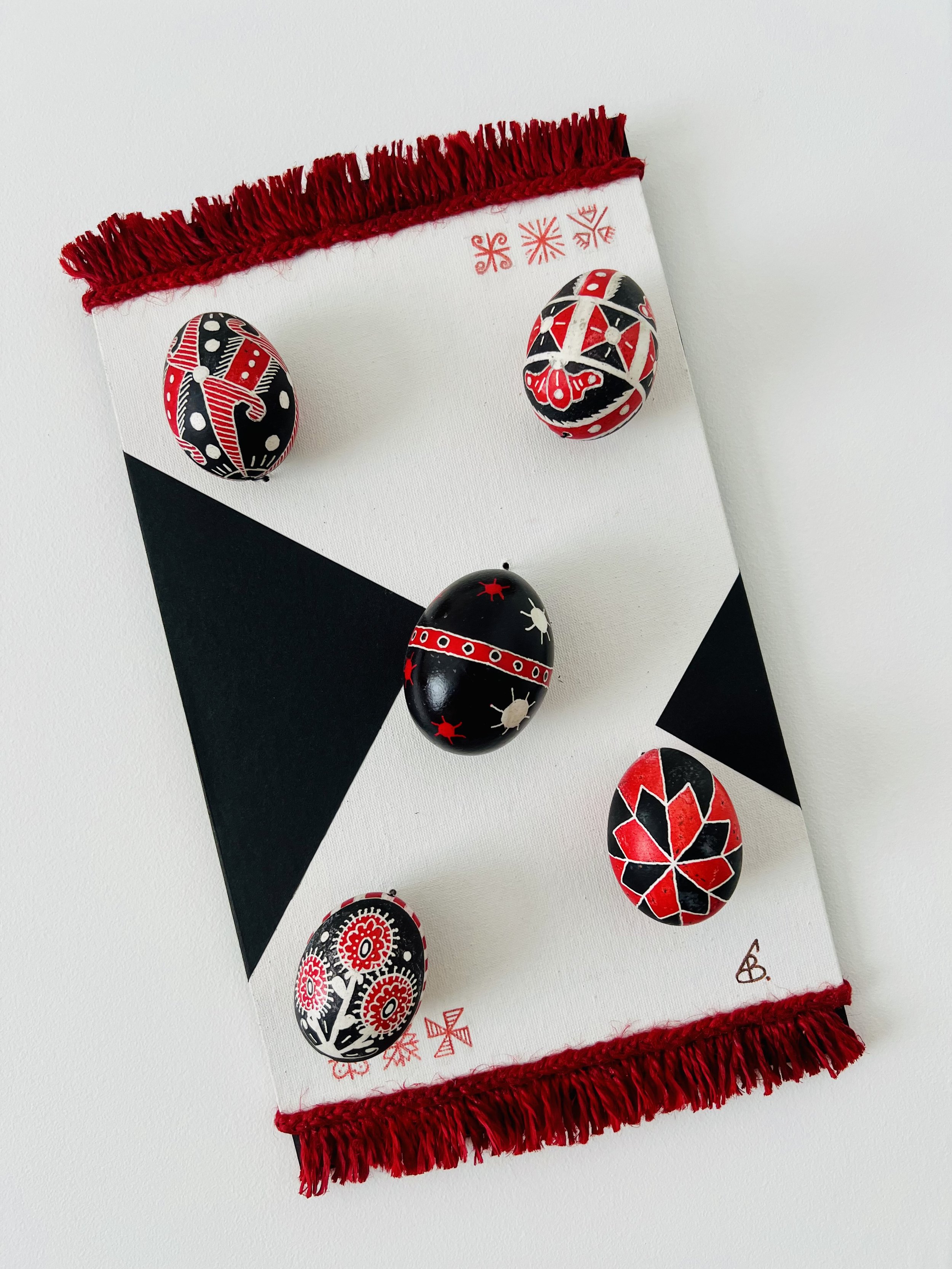
Title: Pysanky Panel
Direction: Before the Worlds / Ancestral Languages
Medium: Traditional Ukrainian pysanky (hen eggs), cardboard panel, black cardstock, hand-knitted textile braid, red and black dyes, beeswax, acrylic markers.
Technique: Traditional Ukrainian pysanky technique using a kistka (pysachok), beeswax, candle flame, and successive dye baths in traditional Ukrainian folk colour palette.
Dimensions: 20 × 34 cm | 7,9 × 13,4 in
Format: Vertical
Framing: Unframed
Year: 2020
About Artwork:
Pysanky Panel explores the egg as a compact symbolic universe — a form in which ideas of birth, growth, nature, protection, continuity, and cosmic order can coexist within the space of a human hand.
Five hand-painted eggs are arranged across a vertical field, each carrying a different visual language. Their number introduces another bodily association: five forms, like five fingers of a hand, each individual yet belonging to a single structure.
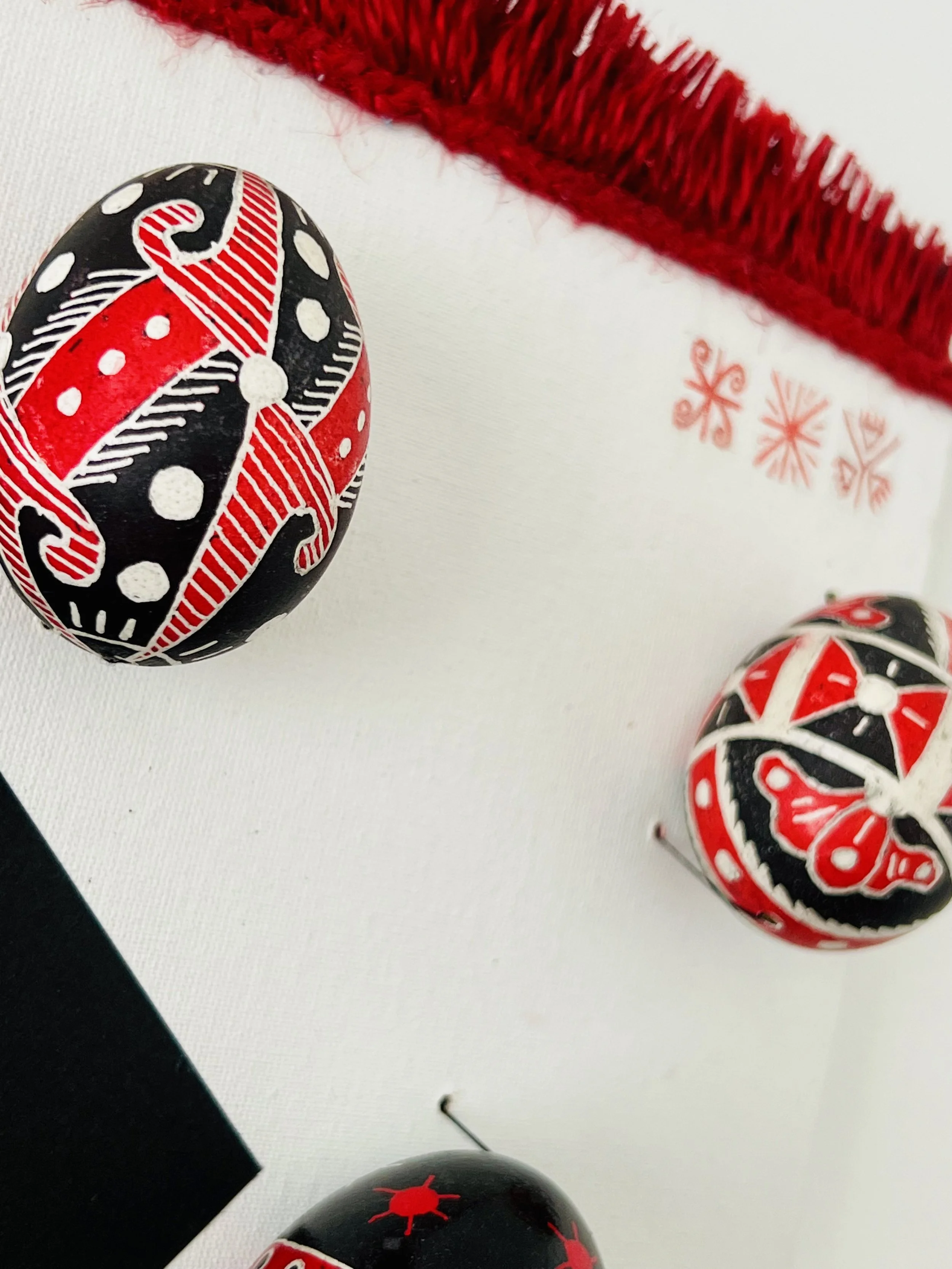
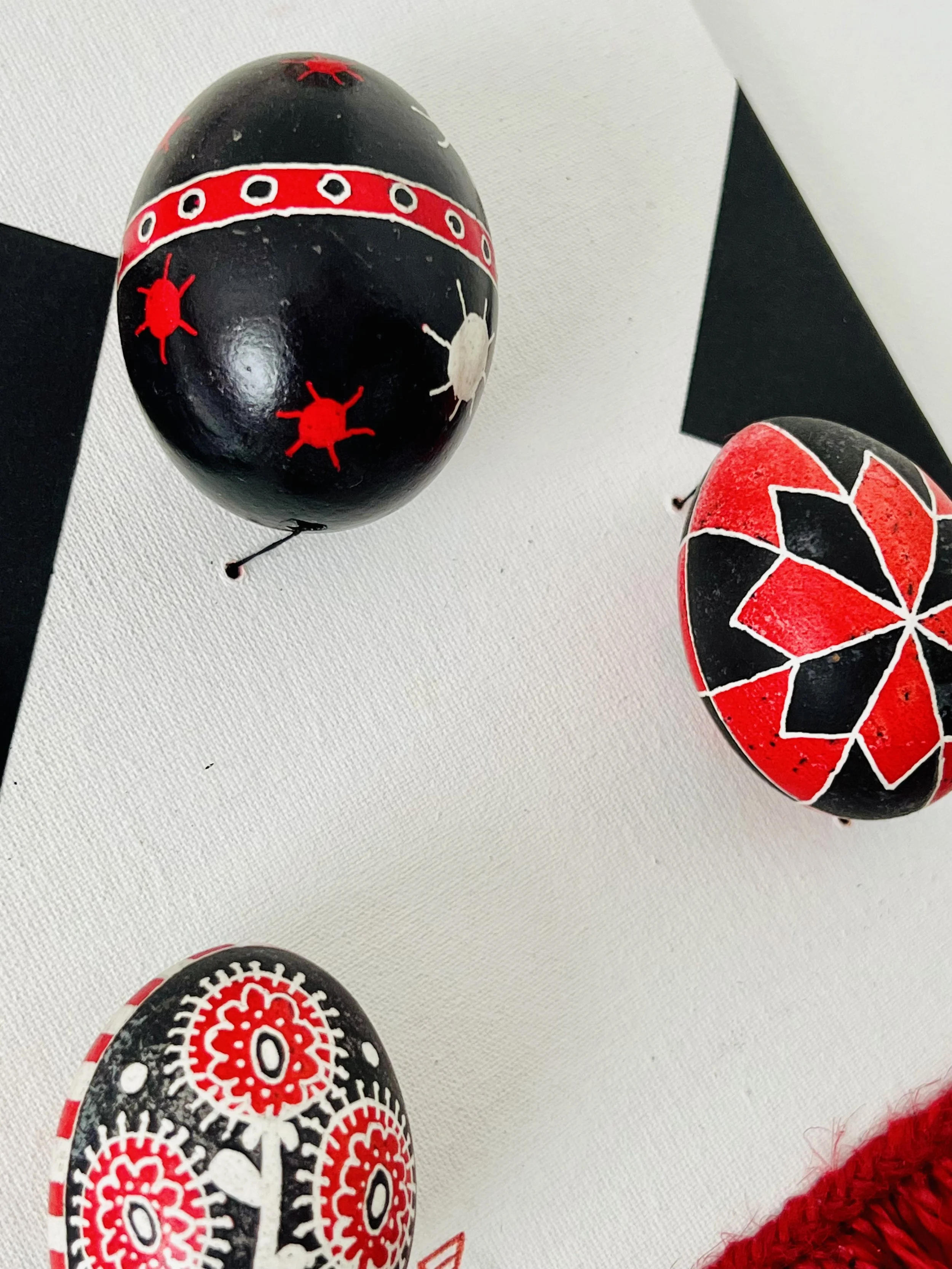
The ornaments move between vegetal, geometric, cosmic, and ancient symbolic forms. One egg carries a stylised Ruzha, a recurring motif in Ukrainian decorative traditions associated with the sun, cyclical movement, life, and the ordering of the world. Another develops through branching vegetal imagery, while the central black egg is divided by a horizontal band, creating an image reminiscent of an equator separating and connecting two fields. Other eggs draw on more archaic geometric structures — division, repetition, symmetry, rhythm, and the transformation of one form into another.
The eggs do not exist here as isolated objects. Black geometric elements enter the white surface, while additional hand-drawn symbols extend the ornamental language beyond the eggs themselves. Textile fringes at the upper and lower edges evoke the structure of a traditional Ukrainian rushnyk, turning the rectangular support into a symbolic field rather than a neutral background.
The work emerged from my study of inherited visual languages and the ways meaning can survive through repeated forms. Long before developing Naive Symbolism and Emotional Cartography, I was already interested in the same fundamental question: how can a simple visual sign contain something much larger than itself?
In Pysanky Panel, the egg becomes an answer — a small physical form capable of holding an entire imagined universe.