Inner Garden (Presence)
This artwork explores presence as a state of inner stability and self-containment. It reflects the capacity to remain fully with oneself, where silence becomes supportive rather than unsettling, and identity emerges as a balanced and integrated form.
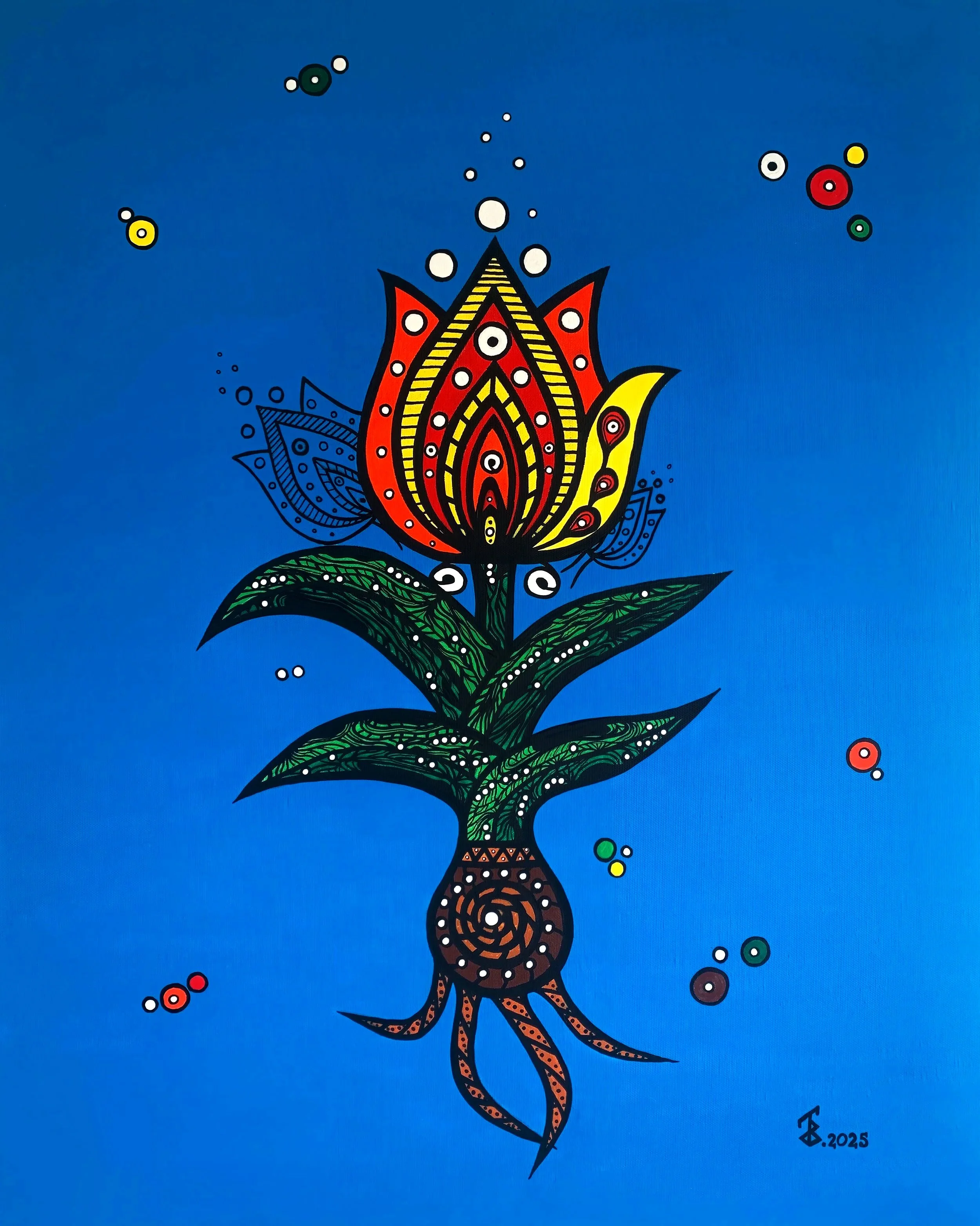
Title: Inner Garden (Presence)
Series: Human Garden
Direction: Exhibition Works / Core Paintings
Medium: Acrylic on canvas
Dimensions: 76.2 × 61 × 3.5 cm | 30 × 24 × 1.4 in
Format: Vertical
Framing: Unframed, Painted Edges
Archive Number: CP-HG-003-2025
Authenticity: Archival & Collector Documentation
Year: 2025
-
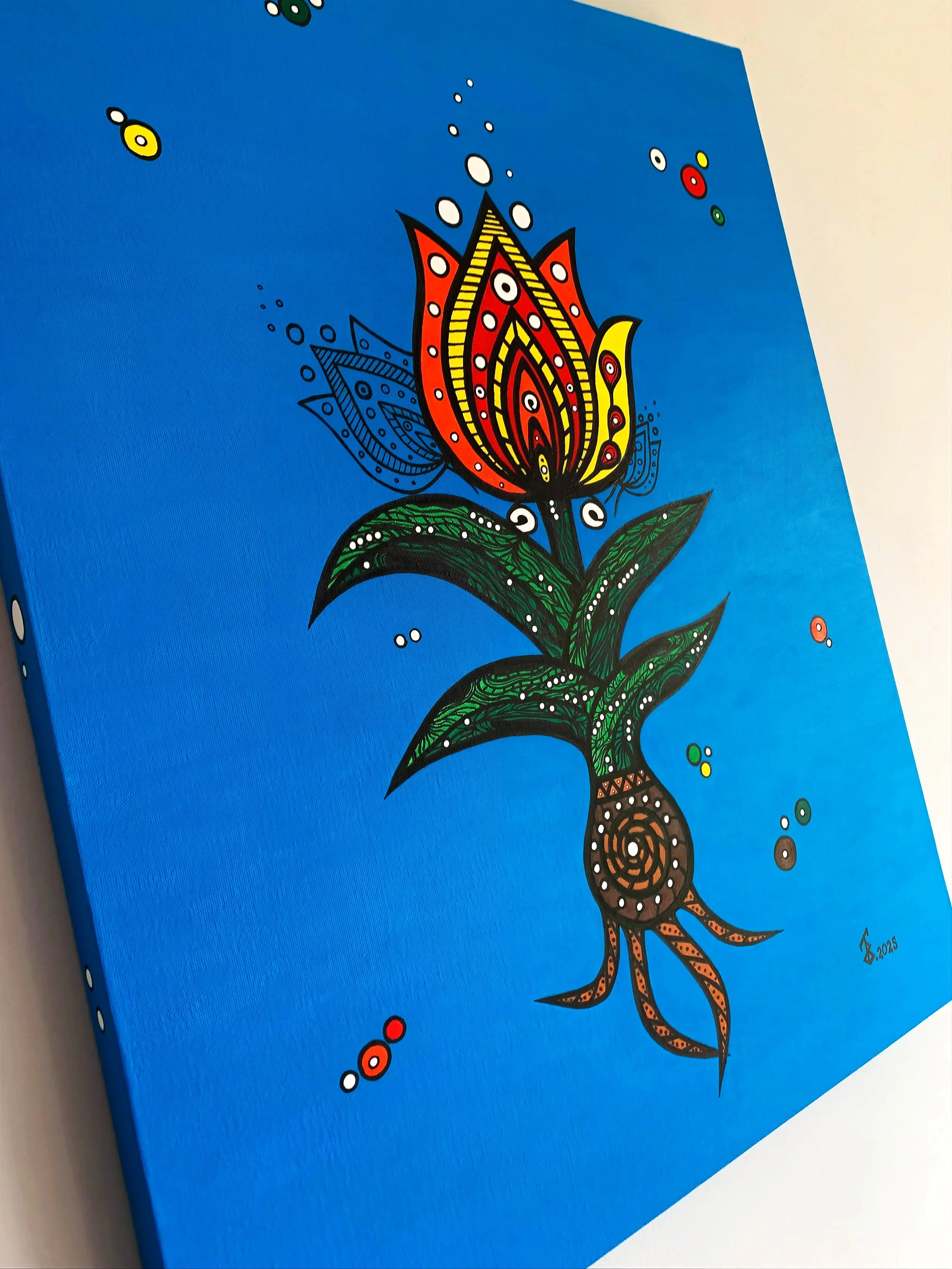
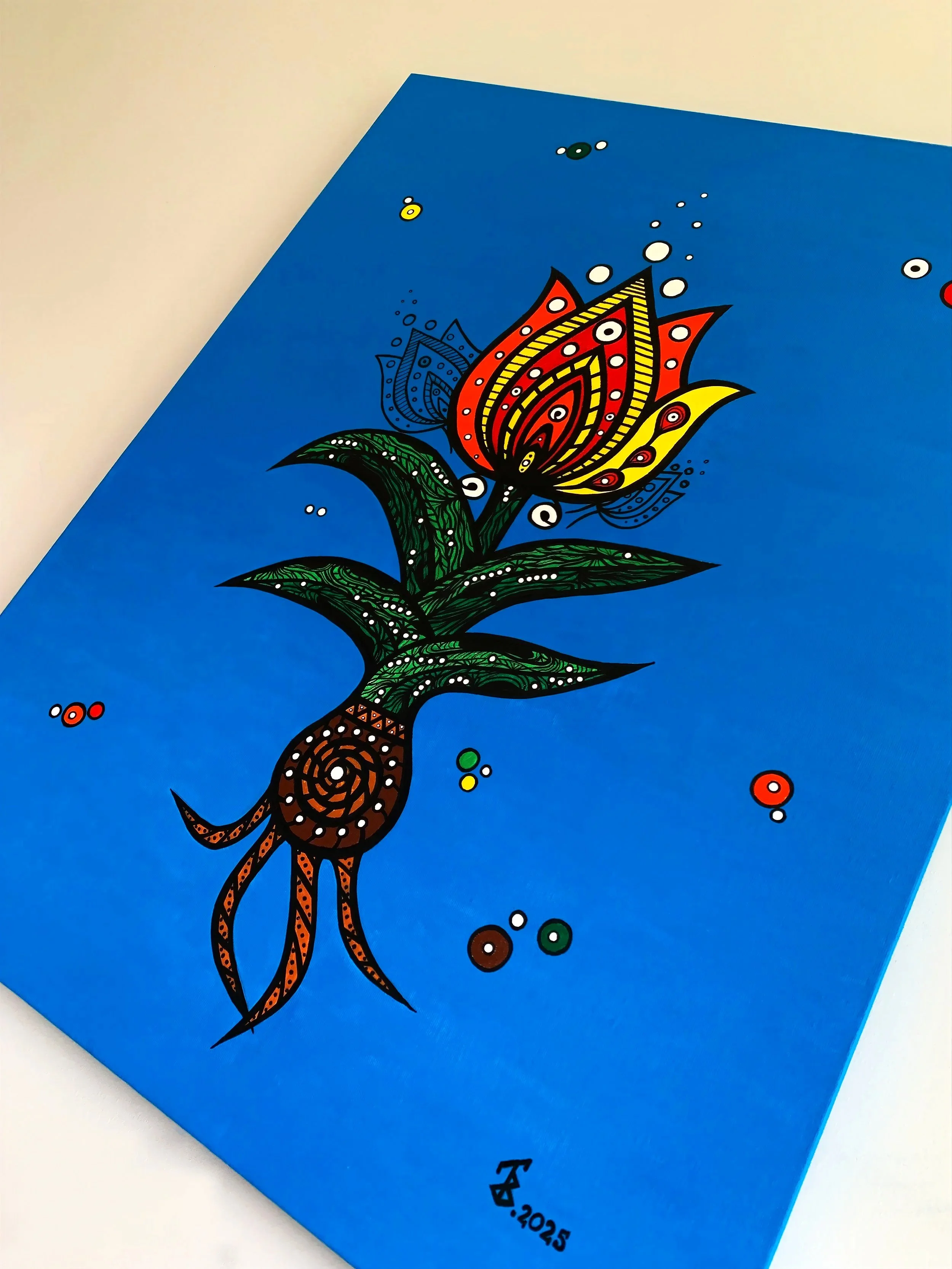
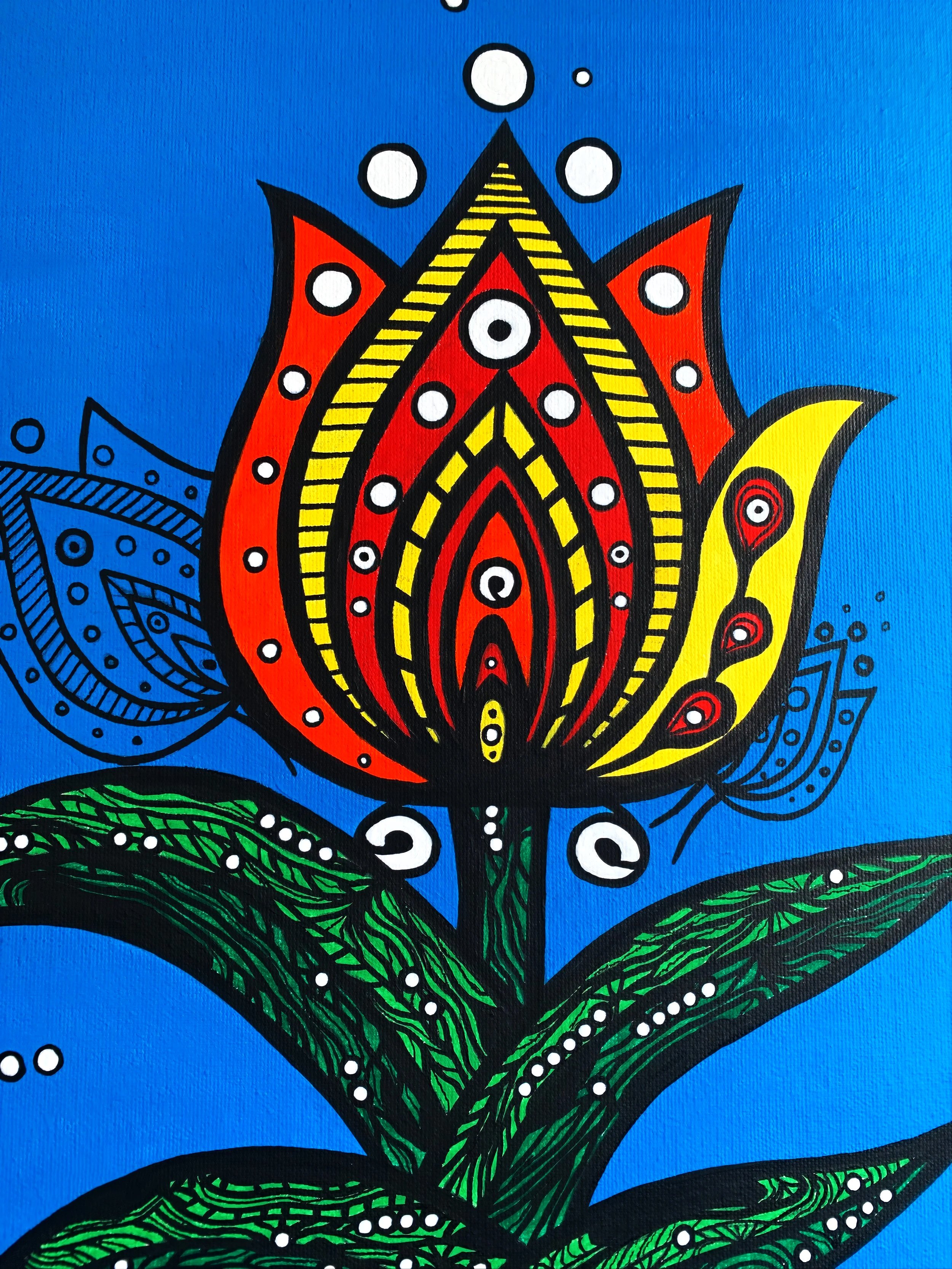
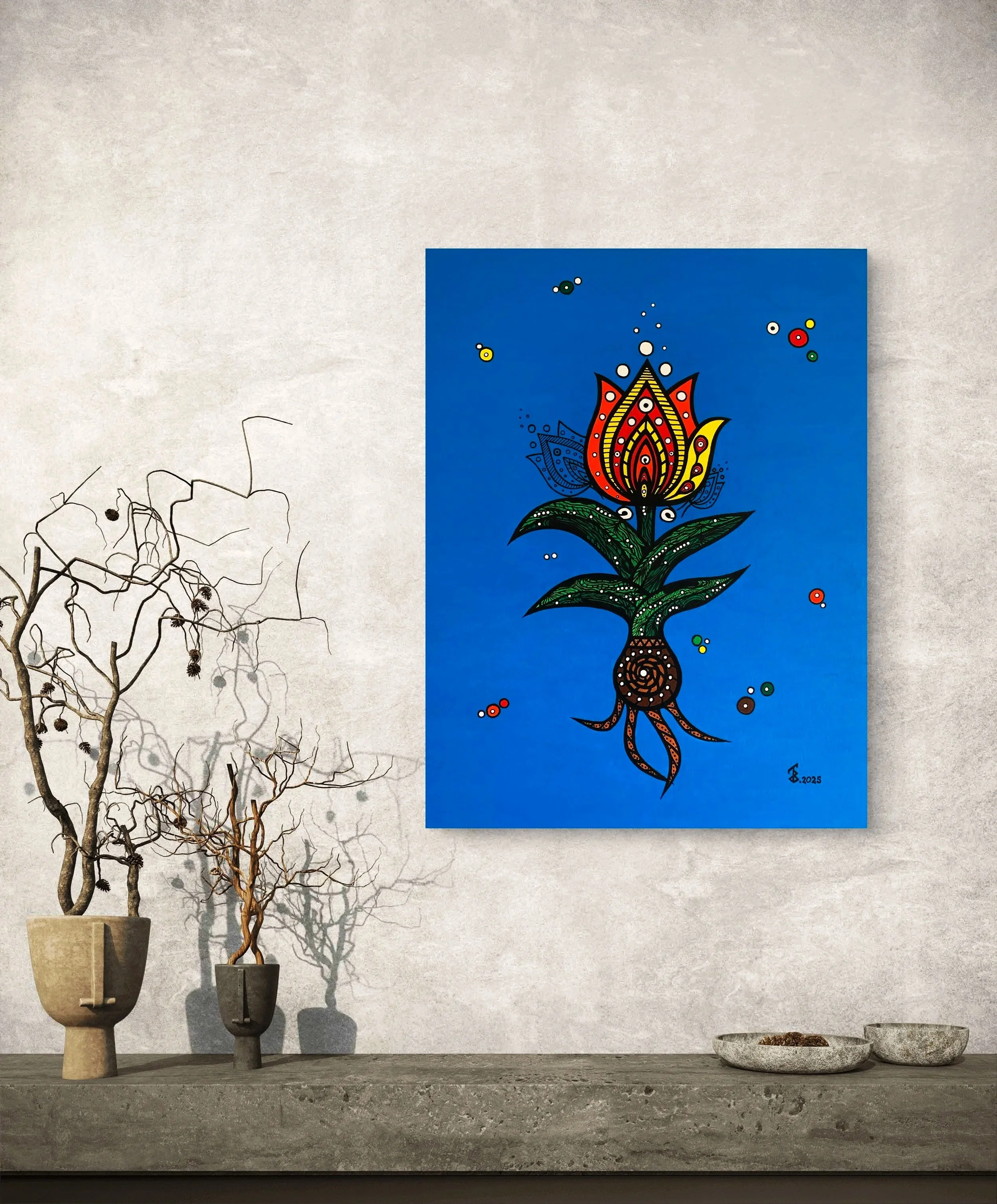
At the center stands a single tulip, gathered and stable in form. Below, the bulb contains a spiral — a symbol of inner continuity and self-sustaining energy. White dots rise upward like breath, reinforcing a sense of calm presence. The symmetrical leaves create visual balance, expressing stability, coherence, and inner alignment.
-
The painting belongs in a personal space — a bedroom, office, or studio — where a person can exist beyond roles and expectations. It supports moments of reflection, clarity, and reconnection with oneself.
-
A tulip can grow in solitude and still bloom fully. Its development depends not on proximity to others but on the integrity of its internal structure. Nature demonstrates that wholeness is an inner process.
-
Across cultures, a single flower symbolizes contemplation, balance, and self-awareness — from Eastern meditative traditions to Western symbolic art. It represents not isolation, but centered presence and inner harmony.
-
The archetype of the Self appears across psychological and cultural frameworks, most notably articulated in Jungian thought. It represents a person who, having moved through relationships and social structures, preserves inner coherence and autonomy.
-
The image of a solitary bloom expresses a universal idea of maturity and self-possession. Across cultures and philosophies, the concept of an inner center defines presence, awareness, and authentic being.
-
Slogan: “The quiet bloom of full presence.”
To be alone does not mean to be lonely.
Sometimes, it means to be whole.
*Each layer reveals a different dimension through which the artwork can be understood — from visible form to deeper symbolic structures.
Layers of Meaning: