Irish Symbolic Forms
Through traditional Irish forms and natural materials, I explored the relationship between craftsmanship, cultural heritage, and symbolic meaning. These works reflect how familiar materials and inherited techniques can preserve connections between people, place, and memory.
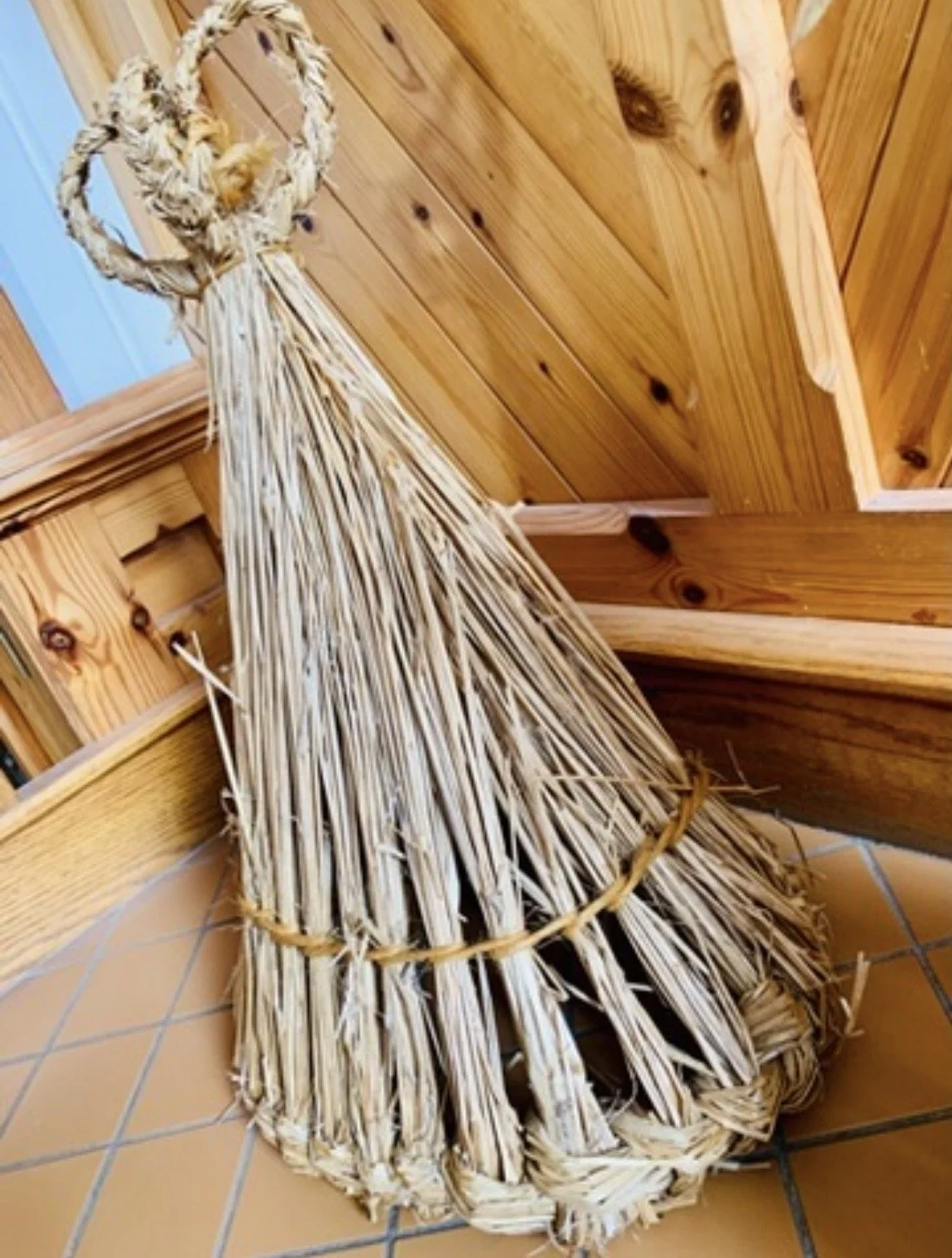
Title: Strawboys Headpiece
Direction: Before the Worlds / Ancestral Languages / Irish Symbolic Forms
Medium: Straw, natural fibres, twine
Technique: Traditional straw weaving, binding and construction
Dimensions: Approx. 60 cm high × 40 cm diameter | 23.6 × 15.7 in
Display: Freestanding or exhibited on a suitable support, indoors
About Artwork:
The Strawboys Headpiece draws on an Irish folk tradition in which groups of disguised performers appeared at weddings, wearing elaborate costumes and masks made from straw. Their arrival brought music, dancing, and playful disruption to the celebration, while their presence was traditionally associated with good fortune for the newly married couple.
The tall, conical structure transforms an ordinary agricultural material into an object of disguise. Straw conceals the individual beneath it, allowing a temporary identity to emerge through costume and collective ritual.
In this form, weaving becomes more than a practical technique. It connects the natural landscape, communal celebration, and the human desire to mark important transitions in life.
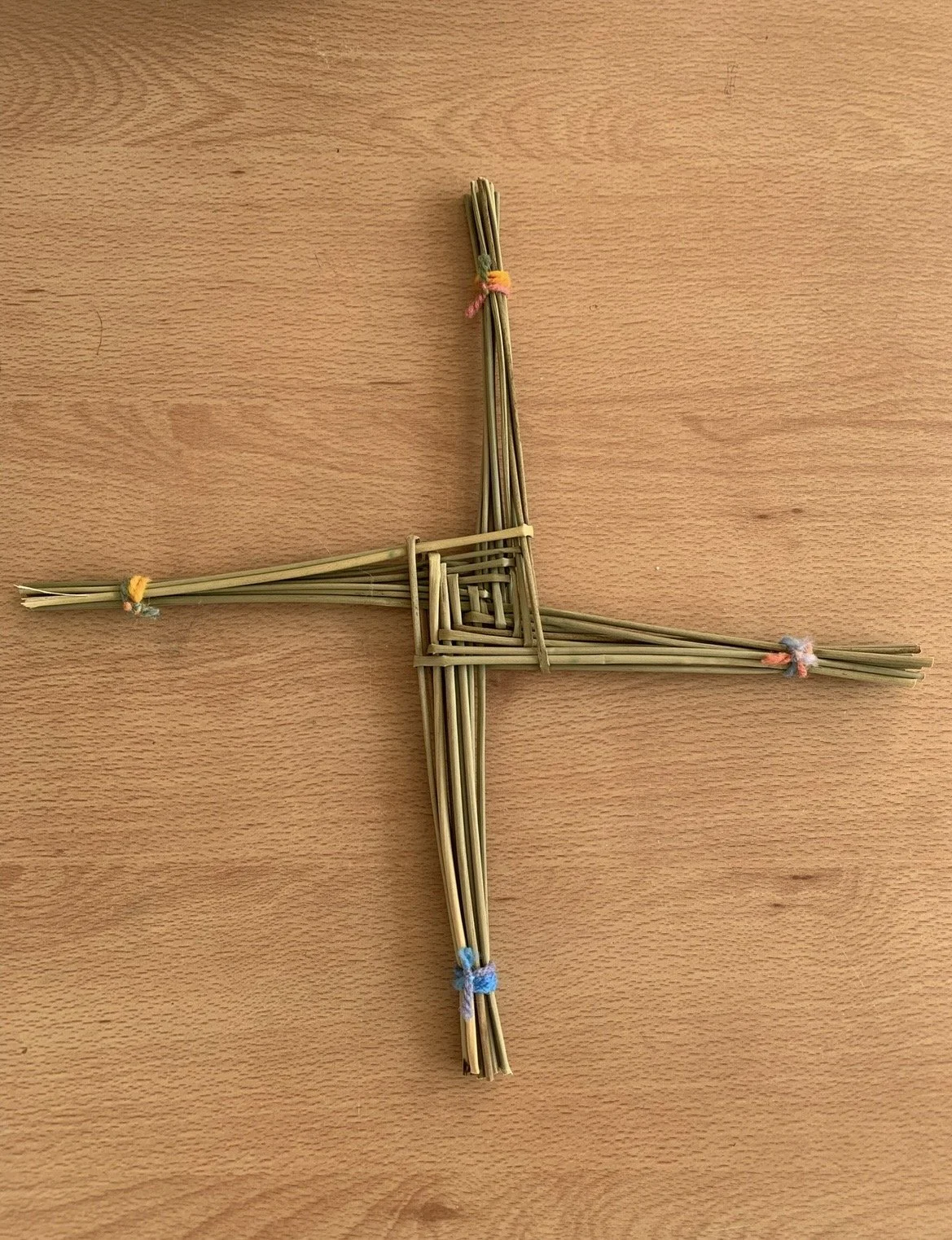
Title: St Brigid’s Cross
Direction: Before the Worlds / Ancestral Languages / Irish Symbolic Forms
Medium: Natural rushes, coloured yarn
Technique: Traditional hand-weaving and binding
Dimensions: Approx. 30 × 30 cm | 11.8 × 11.8 in
Display: Wall-mounted, indoors
About Artwork:
St Brigid’s Cross belongs to an enduring Irish tradition associated with 1 February, a date marking the beginning of spring in the traditional seasonal calendar.
Woven from rushes, the four-armed cross was traditionally placed inside homes and farm buildings as a symbol of protection and blessing. Its making connects natural materials with seasonal renewal, faith, and the continuity of customs passed between generations.
The structure emerges through a repeated sequence of folds. Each rush supports the next, gradually forming a geometric centre from which four arms extend.
What begins as a handful of plants becomes a recognisable cultural symbol — a simple woven form carrying centuries of collective memory.
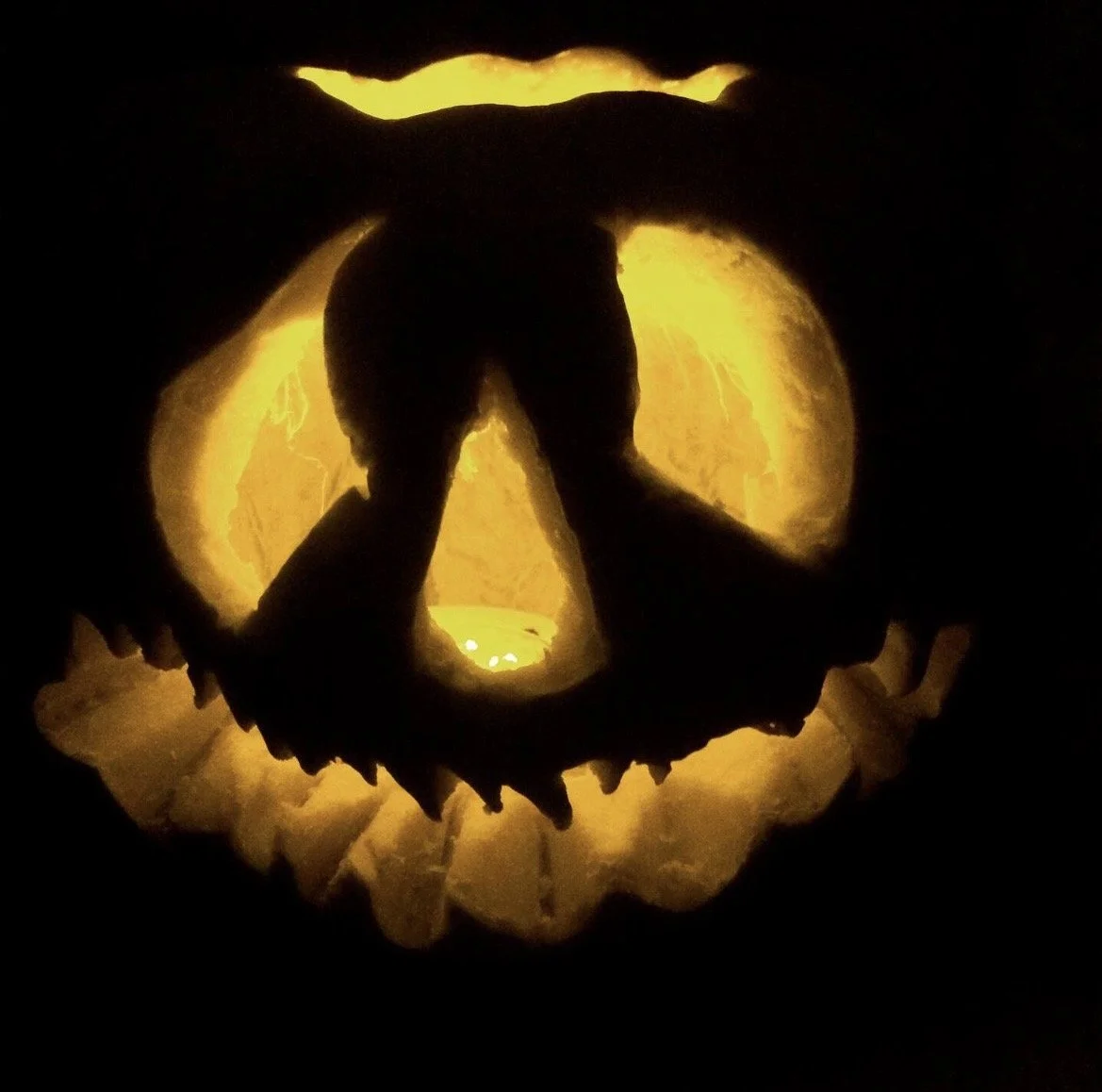
Title: Jack-o’-Lantern
Direction: Before the Worlds / Ancestral Languages / Irish Symbolic Forms
Medium: Natural pumpkin, candle
Technique: Hand-carving, hollowing and internal illumination
Dimensions: Not recorded
Display: Freestanding, indoor or sheltered outdoor setting
About Artwork:
The jack-o’-lantern reflects the transformation of a natural form into a symbolic figure through carving and light.
Its history connects with Irish Halloween traditions, which developed alongside older seasonal customs associated with Samhain. In Ireland, lanterns were traditionally carved from turnips and other root vegetables. The pumpkin became a familiar alternative in North America, where the custom acquired its widely recognised modern appearance.
In this hand-carved interpretation, the pumpkin becomes a mask. Its hollow interior conceals a candle, while the carved openings transform the light into an illuminated face. What appears playful in daylight takes on a different presence in darkness.
The work explores the relationship between concealment and revelation, fear and play, and the boundary between the familiar and the unknown. Through a simple combination of natural material, human intervention, and fire, an ordinary seasonal fruit becomes a figure carrying cultural memory.